
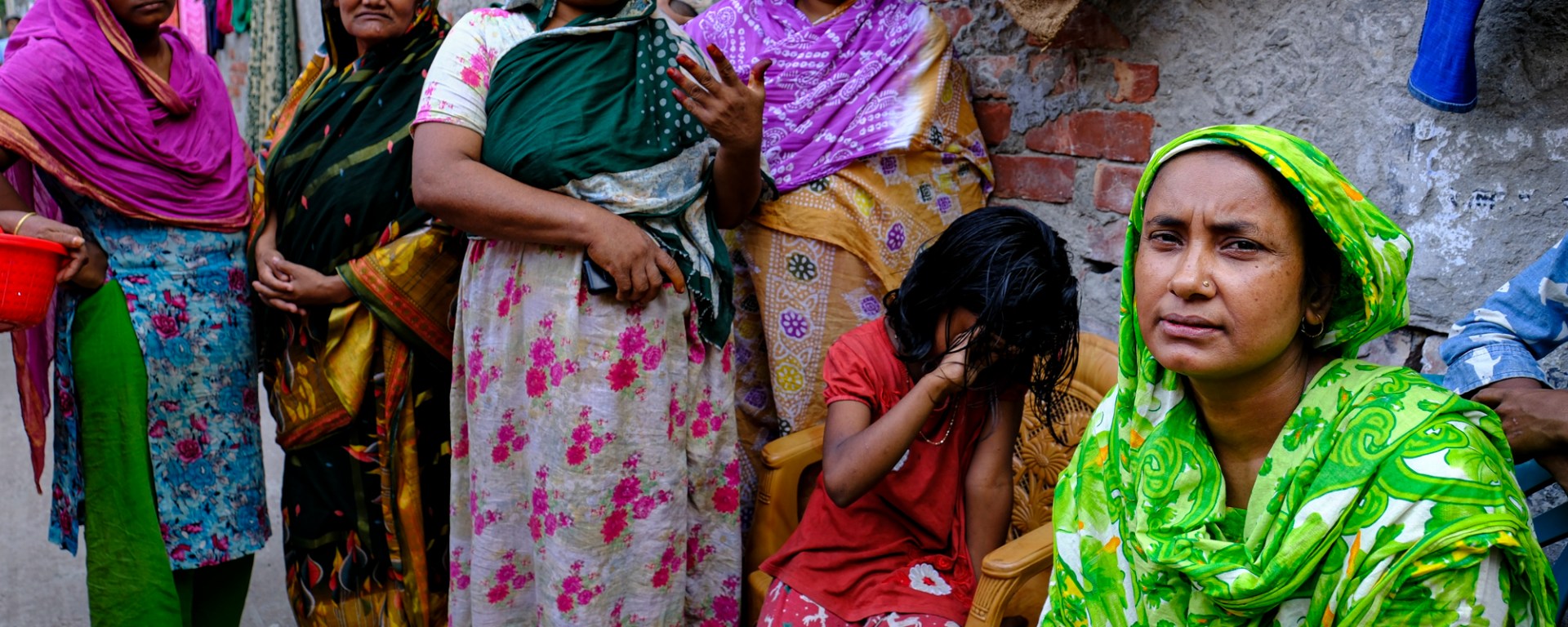
Rubi Begum, sat sweating outside her home in Notunbazar, the second-largest slum in Khulna, Bangladesh. A mother, laborer and migrant, Begum has spent the past 36 years of her life here, working for a fishing company.
For the most part, Begum maintains her home and family alone. Her husband is away most days working as a day laborer in different parts of Bangladesh. Every day, she cleans the family’s home, cooks the meals, and collects water, all while watching over two children.
“I face so many difficulties,” she said. “On top of my kids and water collection, I also have my job. [The kids’] grandmother and grandfather have died so everyone is just taking care of themselves.”
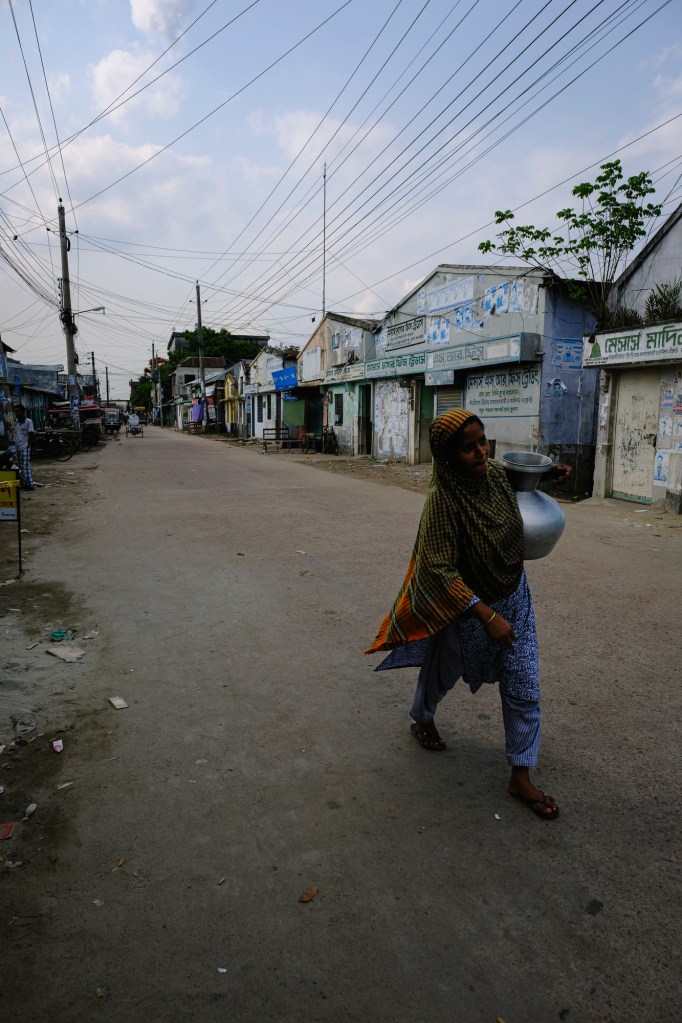
In 2023, UNICEF reported that 7 of every 10 households around the world rely on women and girls over 15 to collect water. In Bangladesh, women are 10 times more likely than men to collect water.
“The water is the responsibility we give to our daughters and women,” Shabira Nupur, head of advocacy and communications for the International Rescue Committee’s Dhaka office, said.
But water collection has become an increasingly complicated task in the three and a half decades since Begum arrived in Notunbazar. With migration rising across the country – including new climate migration on top of traditional economic migrants – demand for clean water in the city has risen sharply. The World Health Organization estimated around 7.1 million Bangladeshi people were displaced because of climate in 2022, usually moving inward to the densely populated, unplanned areas of larger cities..
According to Water Aid, only around 60% of the country’s population has access to safe, drinkable water.

Begum collects water from a government-built pump that pulls clean water from deep under ground through tubes – a process that around 97% of the Bangladeshi population uses to get water, according to Water Aid. The pump is only 700 meters away from Begum’s home, but it can take her anywhere from 30 minutes to an hour to bring water back home. Often, there are large crowds waiting to pump water, which can become dangerous.
“Usually people get hurt when they are getting water at the [pump],” Begum said. “Some people have bruised hands and fractures in their legs and hands because of the chaos.”
Other injuries can include heat stroke or heat sickness because of the extreme temperatures and exposed pumping area.
Begum typically takes two to three koloshes, a traditional Bangaldeshi pot which holds around 5 liters, to the pump once a day. To supplement the meager water supply, Begum said she tries to collect rainwater for drinking and washing clothes. During rainfall, she estimates she’ll get around 20 to 40 liters.
But in the dry seasons, spanning from November to March, Bangladesh can sometimes bring in less than 110 millimeters, although during the wet season from April to September the country receives an average of 2,000 millimeters – almost 79 inches..
In another part of Notunbazar, the Bangladesh Rural Advancement Commission (BRAC), replaced a 60-foot deep water pump with one that reaches 700-feet underground. The deeper pump avoids salt contaminated water, allowing users to gather safe drinking water. It cost around 318,922 Taka, around $2,723, and serves around 100 of the 20,000 people estimated to live in the slum.
Twenty three-year-old Sharmin Aktar said the newly installed pump has greatly improved conditions in the slum for her. Previously, Aktar would travel around 2 kilometers to the nearby Rupsha River to collect drinkable water.
Aktar was was born in Notunbazar after her family migrated 40 years ago when their riverbank home in Ilahi Aur was washed away.
“We faced a lot of struggle before with finding clean water but now the problem is resolved,” she said.
But the BRAC pump does not serve everyone, including Rina Gayan. Gayan, who has lived in the slum for the past 30 years after losing her home in Gopalganj due to floods, said the pump is too far away for her to access.
She also said water pulled from the pump can be unsanitary, so she chooses to make the half kilometer walk to the government issued pump once or twice a day instead.
“Some areas here function,” she said. “But others don’t because we don’t have those same opportunities.”
 UM to Bangladesh