


In the wake of Bangladesh’s deadliest dengue outbreak, researchers respon
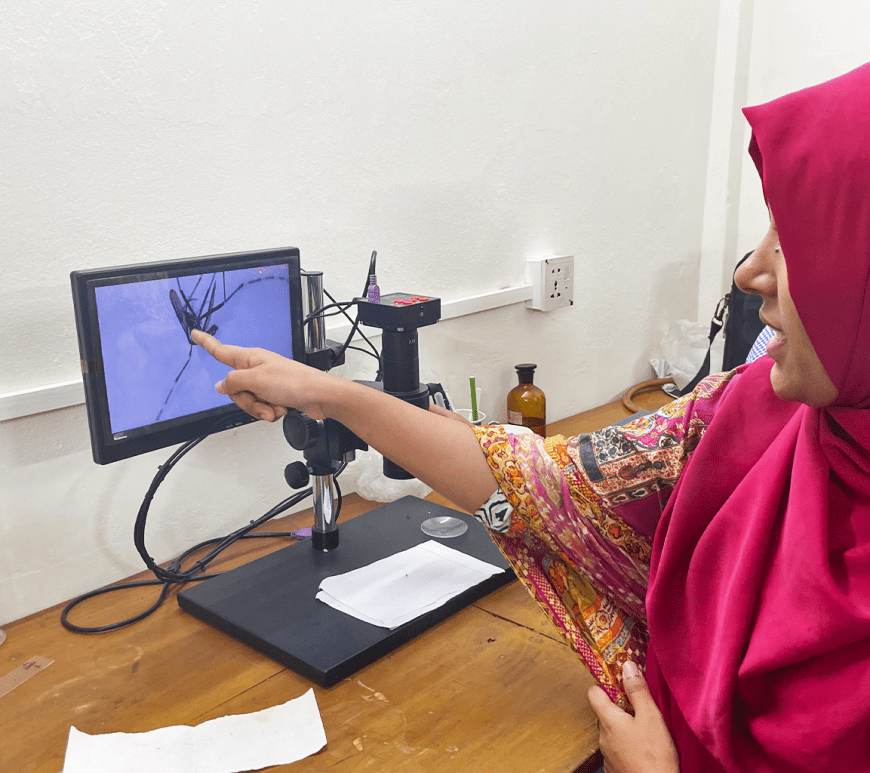
By Hailey Smalley This story first ran in Mongabay, an online news site dedicated to global environmental coverage. In Bangladesh, regular cycles of heat and rain have long cultivated dense populations of insects, and, by extension, the diseases they carry. Dengue fever was first confirmed in Bangladesh 60 years ago, but the disease, carried by Aedes aegypti mosquitoes, caused unforeseen devastation in 2023. By the end of the … Continue reading In the wake of Bangladesh’s deadliest dengue outbreak, researchers respon

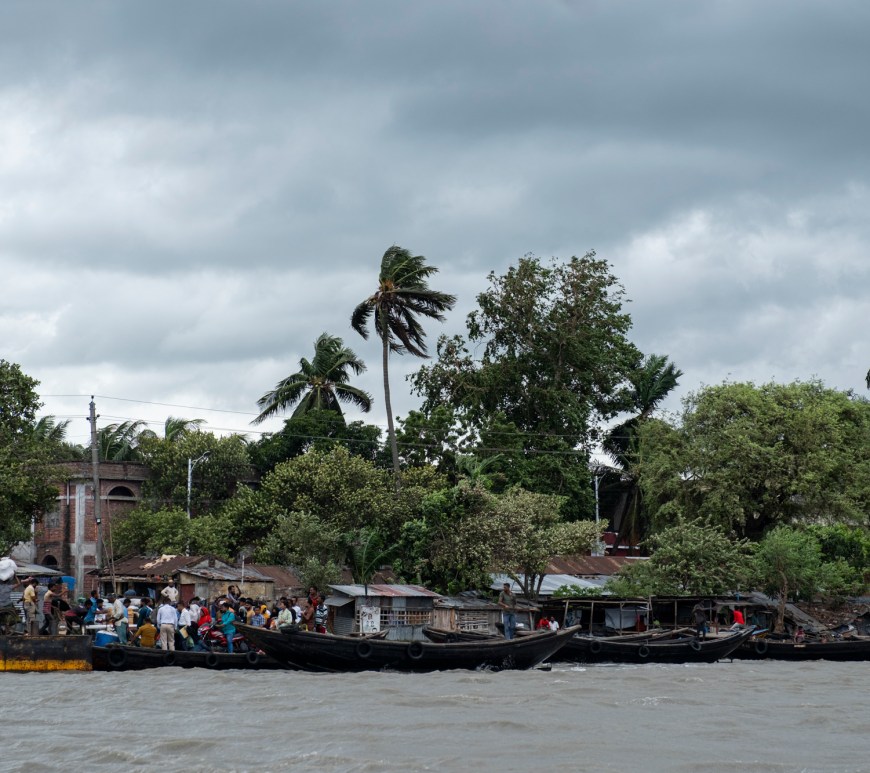
Riding out a cyclone
We have talked a lot about the value of “seeing it like it is” and “feeling it like it is,” but, in reality, these are very difficult hallmarks to meet. As a journalist, one of the first things you learn is that everybody wants to put their best face forward. Traveling in Bangladesh, this challenge was multiplied by our conspicuousness and reliance on others for … Continue reading Riding out a cyclone
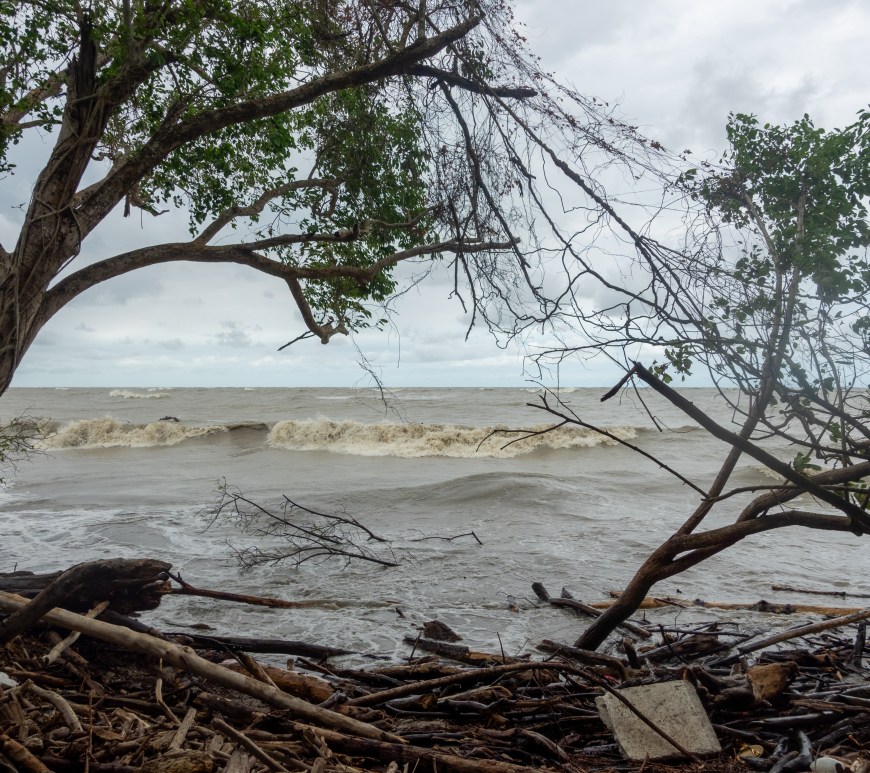
Monkeys, tigers and cobras, oh my!
Dark clouds rolled in over the choppy sea as I drank my Nescafe on the top deck of our boat on the morning of May 25. Despite the gloom, I was excited for our next big adventure. After 10 days of intense reporting, we were officially done with our work in the field and now had the chance to take in the beauty of the … Continue reading Monkeys, tigers and cobras, oh my!

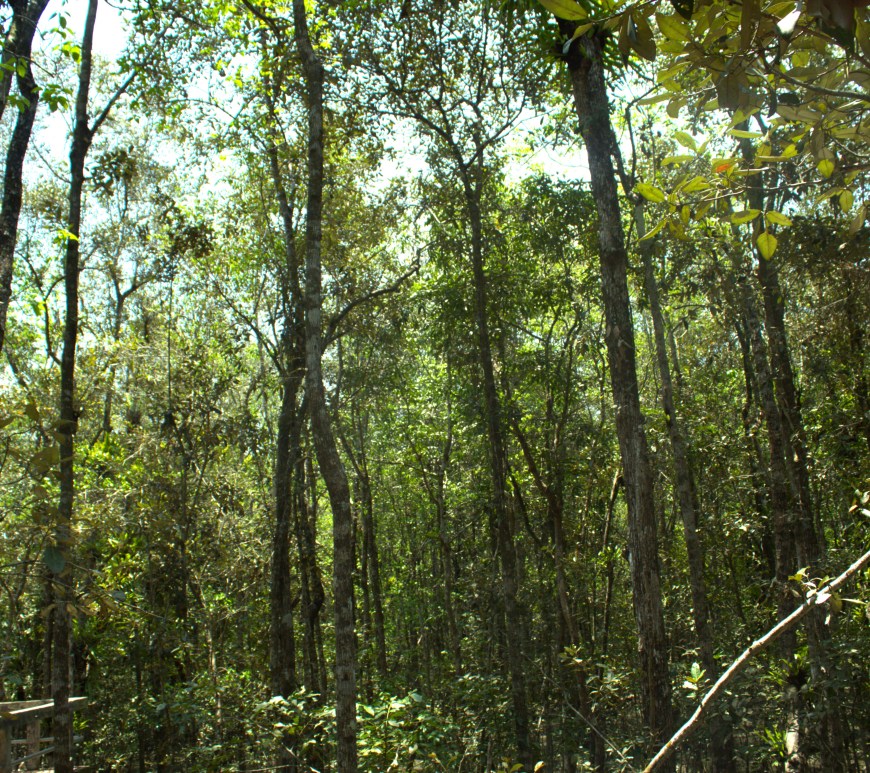
Same moon, same stars, different places
In the Sundarbans, the largest Mangrove forest in the world, a tree called a sundari grows. Sundaris, one of the oldest types of tree in the southern regions of Bangladesh and India, is where the Sundarbans’ name is derived. In Bengali, it translates to beautiful. It’s the perfect word to describe this place. We have spent the last few days exploring this beautiful delta through … Continue reading Same moon, same stars, different places


Water conflicts on the rise
Rubi Begum sits with neighbors outside of her home in Notunbazar. Begum takes care of her children, cooks and cleans and works full-time at a local fishing company. On top of her duties, she also is responsible for collecting drinkable water from the government pump around 700 meters away. Continue reading Water conflicts on the rise

Repurposing plastics
Single use plastic is everywhere in Bangladesh. Just like elsewhere in the world, people here are ordering food online and leaving the stores with goods wrapped in plastic wrap. More people here are drinking from plastic bottles – water and soda – because the tap water is not safe even for the residents to drink without boiling. The plastic waste is everywhere. It has accumulated … Continue reading Repurposing plastics


Slowing down, for now
Day Three in the Sundarbans met us with that now-familiar thick heat. But we had acclimated, or at least knew what we needed to keep going into the day. The section of river we had been on for the past two days was surprisingly industrial. Massive barges geared up for trips from or through the Suez, and dredging boats cleared the sand to extend the … Continue reading Slowing down, for now


Foreign aid and NGOs in Bangladesh
The nepa palm home of Shobita, Bina, and Mohon Mondol home sits on a narrow strip of compressed silt near the confluence of a canal and the Pashur river in the delta of Bangladesh. They dip drinking water from a 2,000-liter rainwater collection tank the received last year from with help of the local welfare center. The tank saves the Mondols from having to make … Continue reading Foreign aid and NGOs in Bangladesh


Not a care in the world
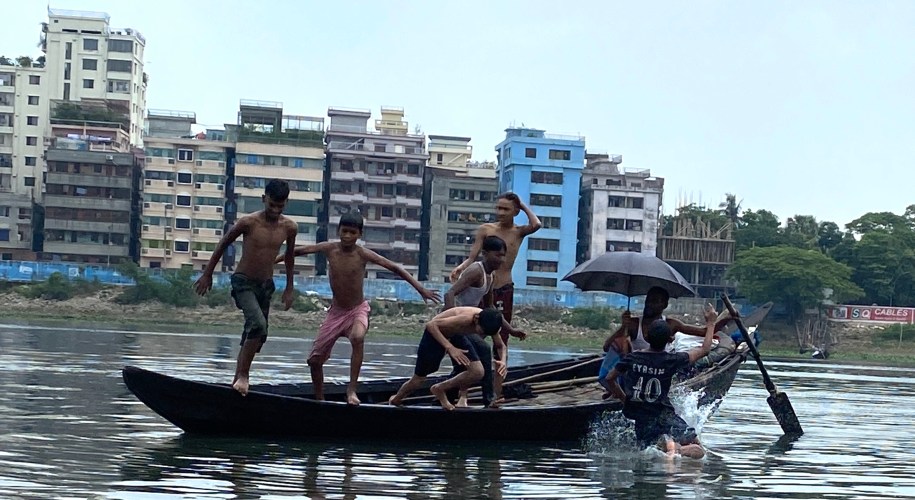
The day kicked off with an early wake up around 6:30 a.m. My slumber at the City Inn that night was not the best of the trip, but not the worst. One thing I have come to learn about Bangladesh is that many of the beds are not soft, nothing like my queen-size memory foam mattress back in Missoula, Montana. The beds here feel like … Continue reading Not a care in the world


Shifting chars: The human face of climate migration
Momena Beguma, 85, stood in the doorway of her house on stilts in the Passer River. The Bangladeshi woman has moved 10 times because of flooding and river erosion. “I never know when we will have to move again,” she said. The Dhangmari Village in Bangladesh, where Beguma lives, is made up of a collection of houses on stilts. The water comes up to the … Continue reading Shifting chars: The human face of climate migration

 UM to Bangladesh