

As our bus departed the chaotic city of Dhaka, Bangladesh, the traffic whizzing past resembled a real life simulation of GTA. We were headed to a drastically different scene. We would soon be entering the tide country, a land filled of villages inundated by tides, along the Rupsha River. I couldn’t believe we were already done with the first portion of our trip. We were all just getting used to this city full of new wafting smells.
I could feel myself coming down with some mystery illness, likely the same thing that would infect the entire group one at a time. I slept almost the entire trip from Dhaka to Khulna, with only one hiccup. Halfway through our journey a loud banging woke me up from my sleep. I opened my eyes to see Claire on my left and the bus driver hastily getting our attention. Nobody else was in sight. Our entire group had fled the bus and left us stranded, sound asleep. We frantically got up and searched for our group. We found them eating lunch at a restaurant by the road. After chastising them for the separation we proceeded to have a cup of tea. Once lunch was over, Claire and I chatted for a bit and then fell back to sleep on the last stretch to Khulna.
Our agenda that day was to get settled into our new hotel, and then take a three-wheeled tuktuk, to the second largest slum in Bangladesh. Overpopulated, unplanned residential areas are commonly called slums in Bangladesh. This slum had over 20,000 people living there in cement structures informally housing hundreds of families. We spent the next three hours peering into the homes, chatting with the families that lived there and attempting to ignore the extreme heat wave that these people had lived in.
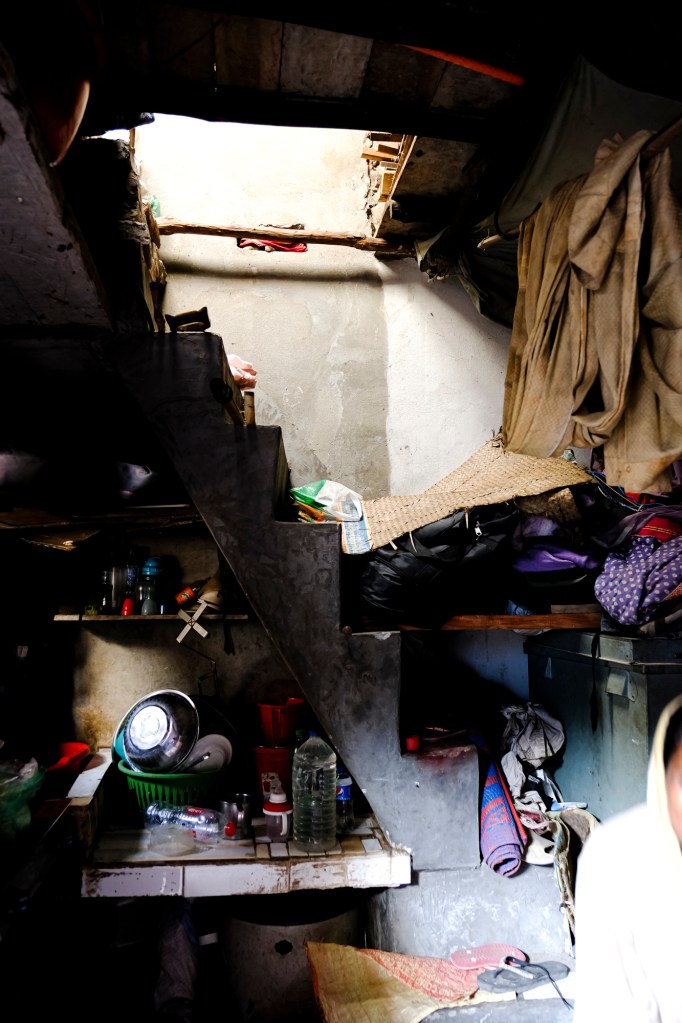
One family in the slum caught my eye in particular — a grandmother, her daughter, and her two grandchildren. I was snapping photos of the grandmother who was sewing a tarp to protect their home from the rain when her daughter came to me. I didn’t have anyone who could translate what was being said, so I just listened to her language and understood her motions like we were playing a game of charades. She undid the buttons of her son’s shirt, pointing at large patches of red skin sores on his face and stomach. There were sores on her other baby’s face as well. She was trying to tell me something about the skin issues, but our language barrier hindered the communication. Despite not knowing the words she wanted to tell me, I could see the pain in her eyes.
Eventually, I was pulled away by the rest of the group, but my inability to communicate haunted me for the rest of the tour. Two hours later, I passed the same home on our way out of the slum. I looked around but could not find the family that I longed to speak with. I decided to show a nearby woman one of the photos of the family I had taken and she immediately fled into a nearby home and came back holding the hands of the mother and son. At last, I grabbed our translator in the group and sat with the family to talk.
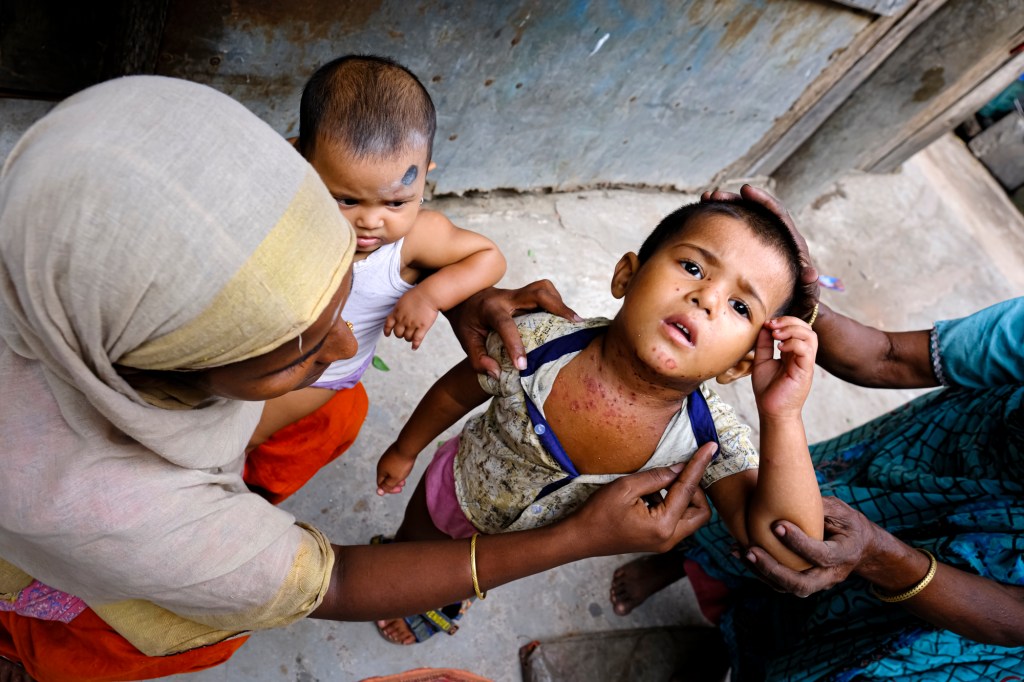
The mother told me her family had been going through some sort of infection that was quickly spreading. She was very worried for her children. It had only started a few days prior to our visit; the grandmother however, had been battling a similar skin disease for the past decade. I stood there and listened to what they had to say, for there was really nothing else I felt I could do. I expressed my sympathy and took their names. I wonder what will happen to their family, and if they will ever move out of that slum.
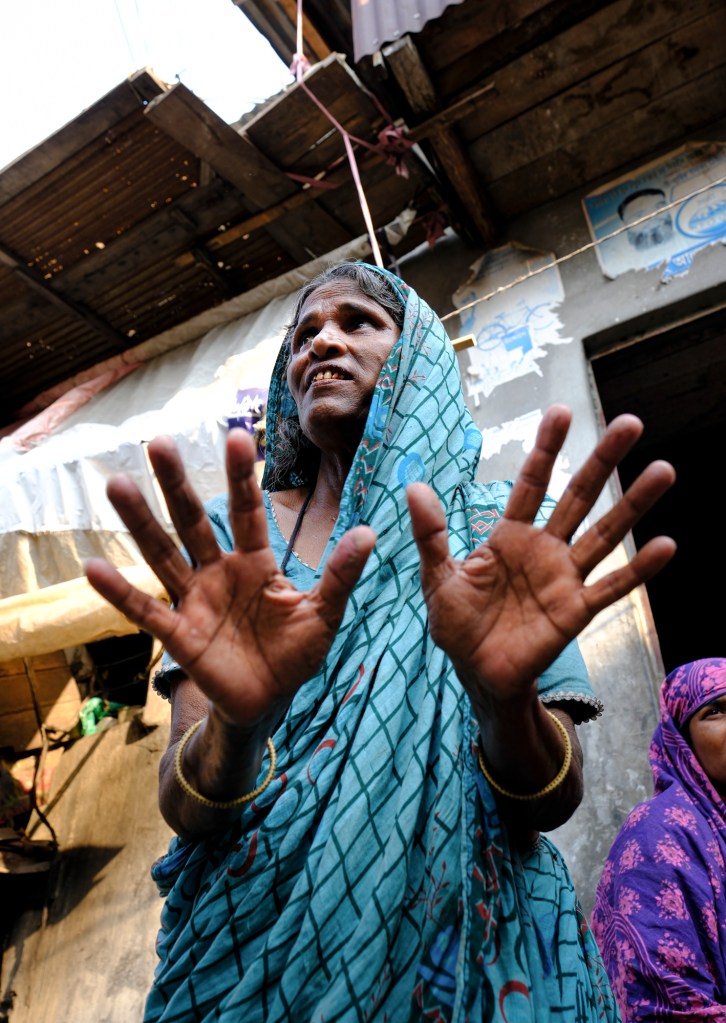
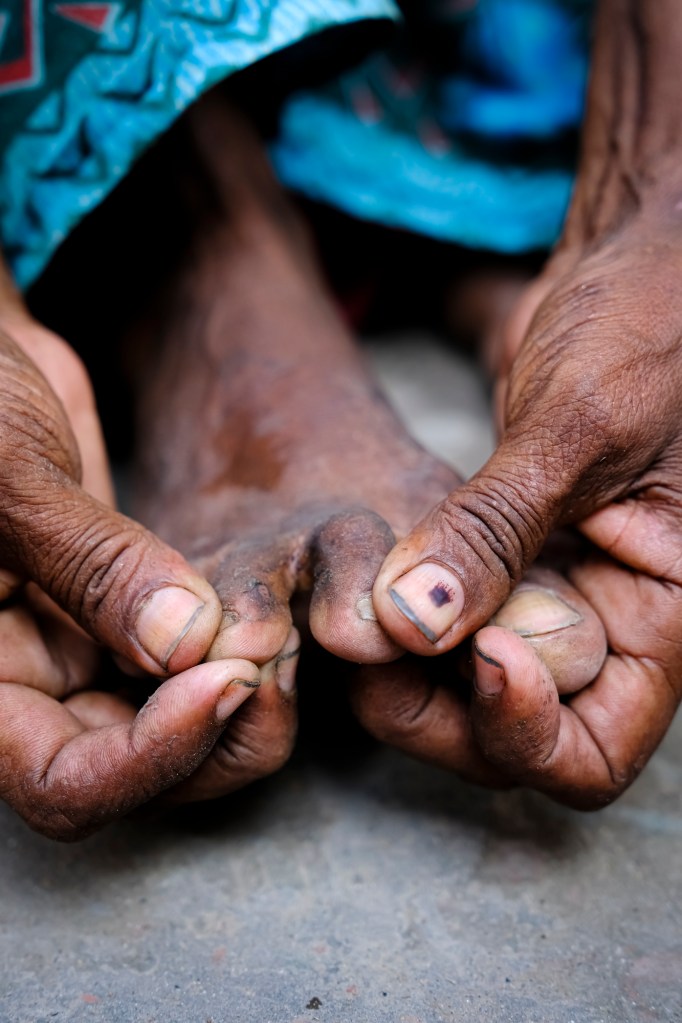
As our tuk tuk departed the second largest slum in Bangladesh, the hands of children reached for mine. I smiled at them and attempted to send a universal translation of love through my tear-filled eyes. Similar to the family I spoke with, I tried to imagine the life that they all lived. But as much as I can sit and wonder, I will never be able to truly put their experiences into words.
Many people I have met on this trip have shown me kindness such as I haven’t experienced before, despite all the struggles that they endure. So I will try to latch onto the innocence of the children I saw, and hope for a brighter future for each of those warm smiles. For the barriers of language can only stunt our immediate disposition, but our human truths hold the power to overcome.
I’ve been thinking a lot about human truths and our existence on this planet while I’ve been on this trip. Our next section of the trip we will traverse the mangrove forest of the Sunderbans all the way to the brim of the Bay of Bengal. Once the boat makes its loop, and lands safely back in Khulna, I will continue my trip in India. This was only part one of most awakening experiences I’ve had in my 21 years. We all exist on so many different planes in the world. But as long as we can capture the moments that truly make our hearts happy along the way, we might always find some peace. This is my first trip out of the States, and I can say it’s off to a good start. Bangladesh, I hope to return to this hungry tide someday; thank you.

 UM to Bangladesh