
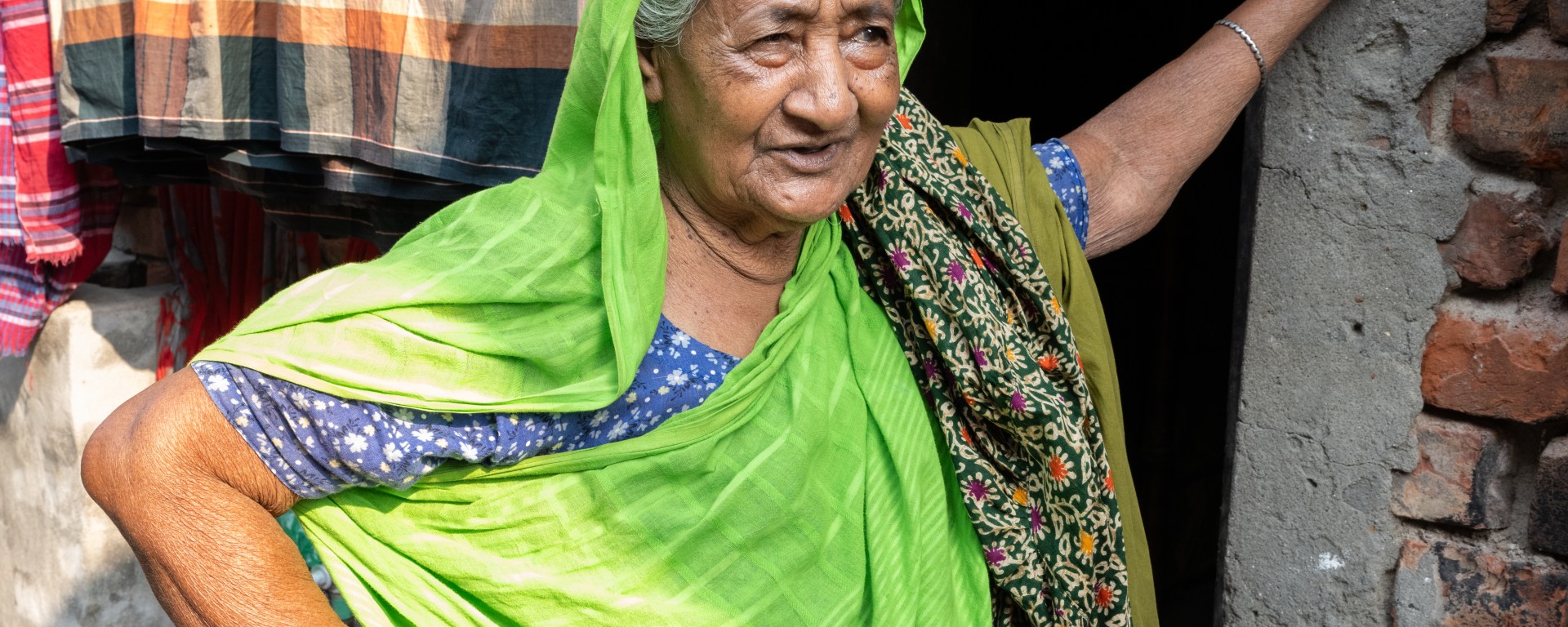
Momena Beguma, 85, stood in the doorway of her house on stilts in the Passer River. The Bangladeshi woman has moved 10 times because of flooding and river erosion.
“I never know when we will have to move again,” she said.
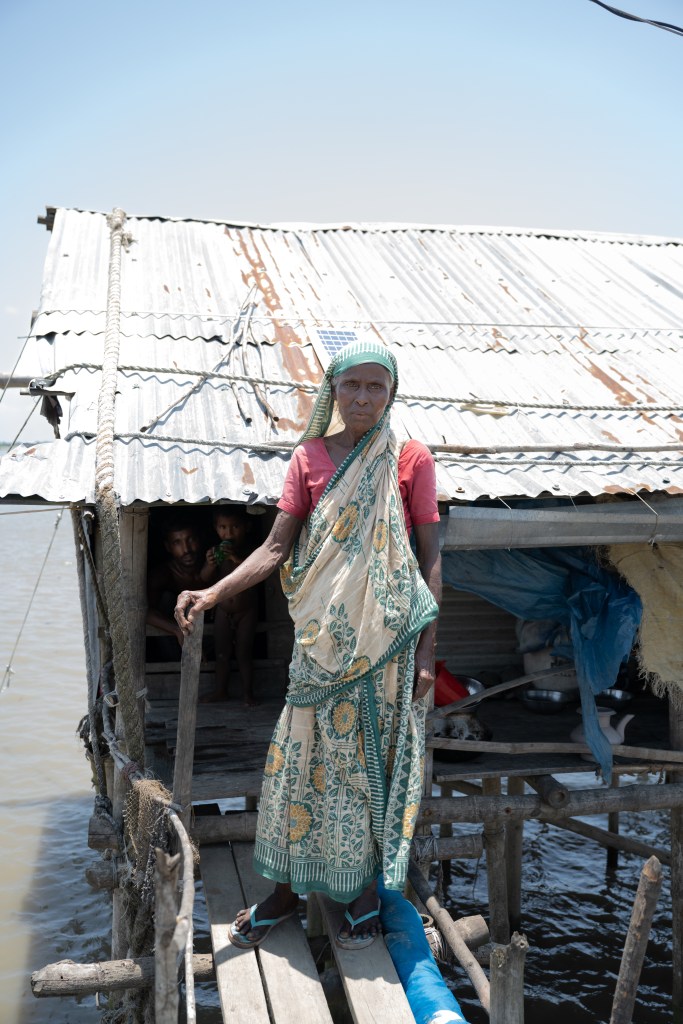
The Dhangmari Village in Bangladesh, where Beguma lives, is made up of a collection of houses on stilts. The water comes up to the floor of the house when it floods, Beguma’s neighbor said. This design helps with flood mitigation but does not always withstand the water because of cyclones and increased salinity affecting the stilts.
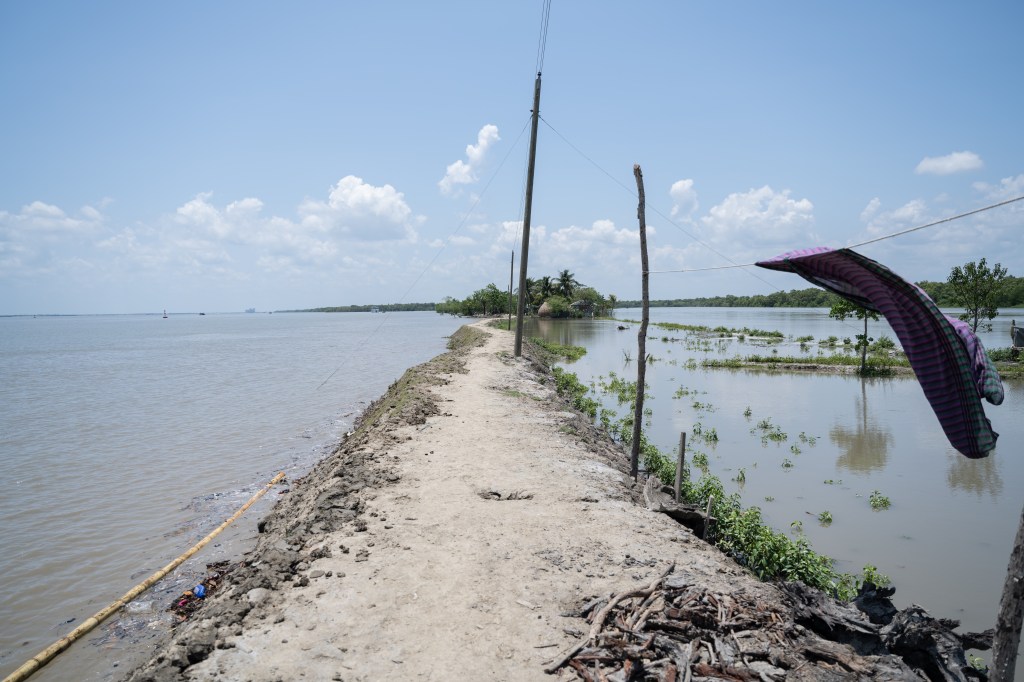
The walkway to Beguma’s house from the other side of Dhangmari is narrow and made of a thick mud known as char. The riverside village rebuilds the walkway every month to keep it from eroding into the river. Across Bangladesh thousands of people are living on chars that are continuously eroding.
The U.S. Agency for International Development estimates over 5 million people live on sand and silt land masses in Bangladesh.
Beguma is not the only one living on the brink of constant movement. Some people are forced to move from their villages into the cities where they typically live in slums with other climate migrants.
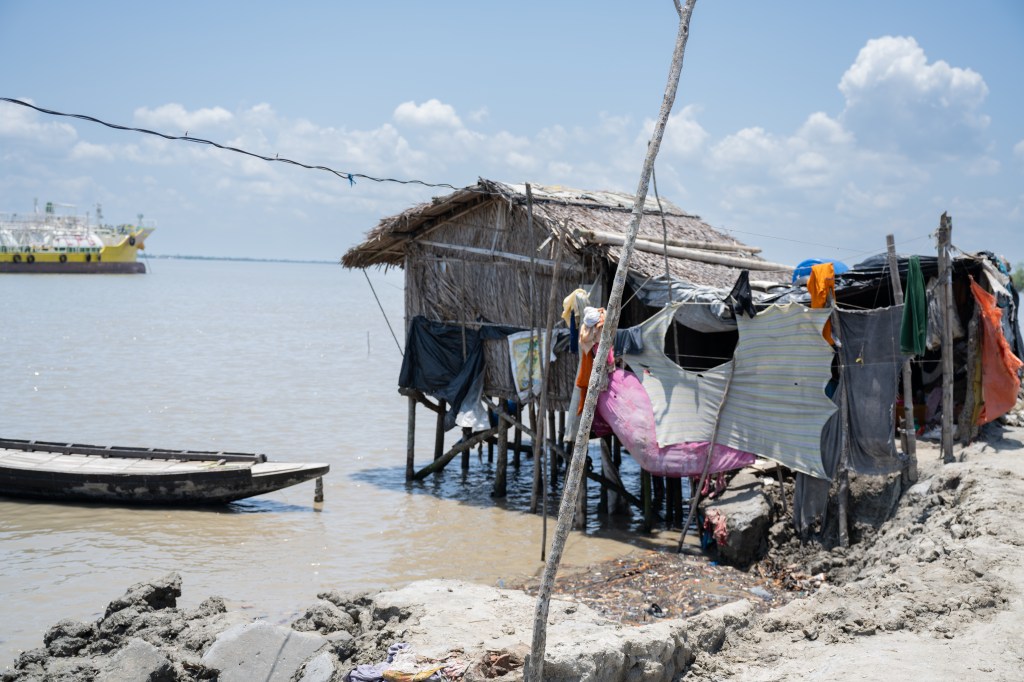
Around 10,000 people in Bangladesh lose their homes to river erosion every year, Mongabay, an environmental news agency, reported in 2022. A study from 2016 to 2017 analyzing the factors behind internal migration reported 66% of people migrate from rural to urban areas. This includes people moving from char lands to larger Bangladeshi cities like Khulna and Dhaka.
Before moving to Notunbazar, the second largest slum in Khulna, because of a cyclone, Montu, a grandmother in her 80s, slept on the streets for around 20 years. Now, she lives in a brick home with her family. Twenty years after moving to Notunbazar she can not afford to feed her family.
There are an estimated 1,500 households and 20,000 people living in Notanbazar, Ashik Rubaiyat, a BRAC representative, said. BRAC is an international development organization that works with the slums in Dhaka to provide a level of sanitation and safe drinking water.
Montu opened up about her experiences in the slum and the lack of support she feels the government gives them.
“You and I are both human beings and I will tell you my truth, that’s all I have,” she said.
 UM to Bangladesh