
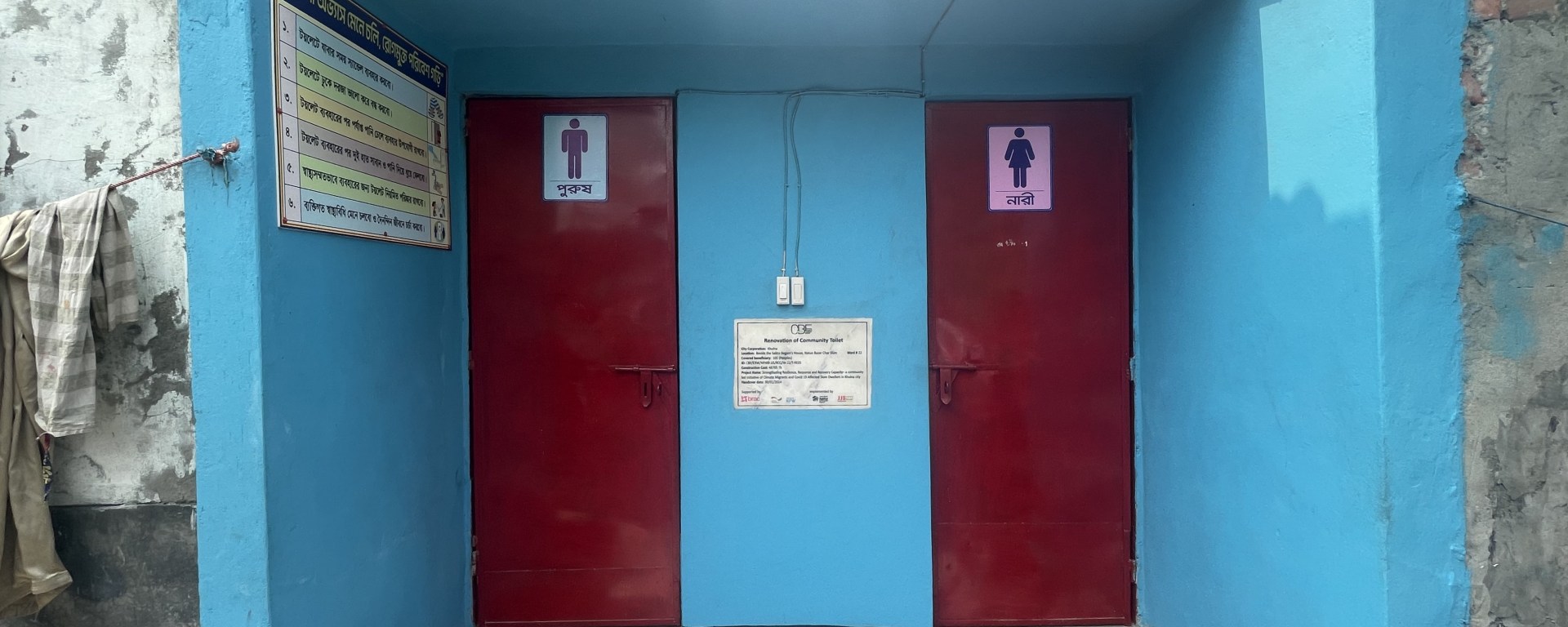
Among the narrow alleyways and wall-to-wall houses of Notun Bazar, two buildings stand out. The blue walls beam through the grayscale of southwest Bangladesh’s largest slum, and the concrete floor is invitingly smooth and unblemished. Signs proclaim both buildings newly renovated and detail the cost – about 800 U.S. dollars.
Despite their flamboyant exteriors, the inside of each building is sparse, with only a single room and a small hole ringed with porcelain.
In Notun Bazar, a remodeled pit latrine is a luxury. The Bangladesh Rehabilitation Assistance Committee installed the toilets in January 2024, but many areas of the slum still suffer from sanitation issues, including a deficit of places to defecate.
As of 2022, over half of Bangladeshi citizens do not have safe sanitation facilities at home, defined by the Bangladesh Safely Managed On-Site Sanitation Project as “flush or pour flush toilets connected to piped sewer systems, septic tanks or different types of pit latrines, ventilated safe pit latrines, pit latrines with slabs and composting toilets.”
Unsafe toilets often deteriorate into public health risks. Floors collapse or latrines overflow. Human excrement piles up and floods nearby water bodies. Disease vectors flourish in the resulting wastelands, conveying cholera, typhoid, hepatitis, dysentery, polio, and worms to the unlucky users.
Climate change exacerbates the danger unsafe toilets pose by increasing the severity and prevalence of floods and storms, ultimately causing more latrine collapses and wider exposure to harmful sewage.
But constructing a safe toilet is no easy feat. Pit latrines, like those in Notun Bazar, employ an intricate system of bacteria and other microbes to break down human waste. The specifics of this process are still poorly understood.
A recent study sampled fecal sludge from 55 pit latrines and found that the toilets’ microbial communities differed from municipal sewage and other waste management systems. Many latrines boasted individualized microbes, suggesting that even small changes in the location or water source could have big impacts on the toilet’s ability to decompose waste.
The study’s authors suggested more so-called “waste-based epidemiology” could lead scientists to identify specific strains of microbes aimed at decomposing waste faster or limiting the production of greenhouse gasses like methane. Monitoring pit latrines could also provide a new source of disease monitoring.
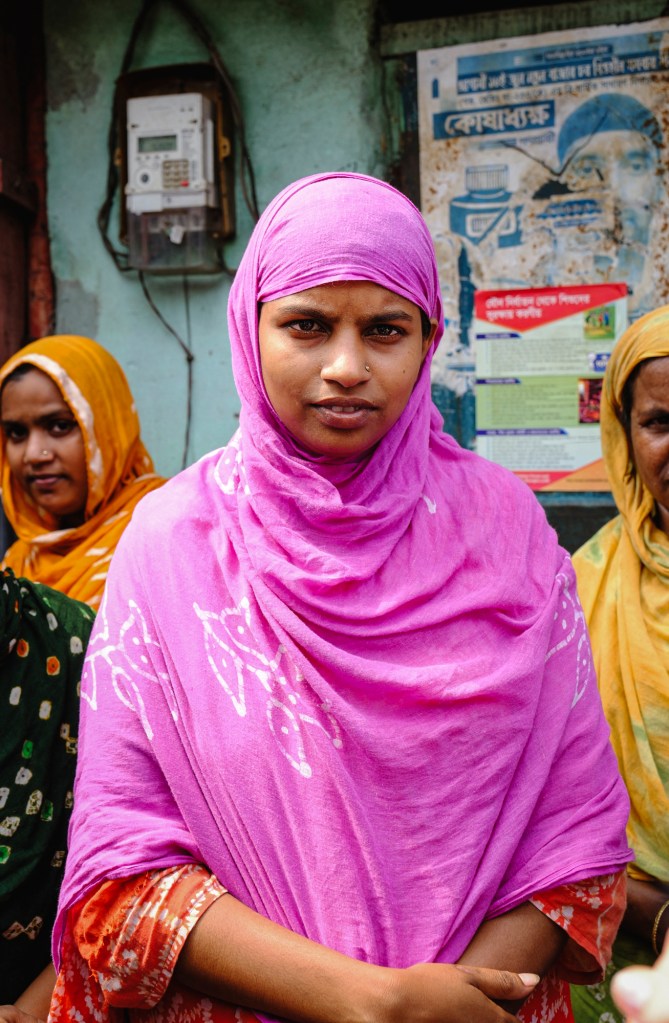
In Notun Bazar, having safe and sanitary toilets provides even more direct benefits. Shani Akter was born in the slum and has lived there with her family for 23 years. She said the recent addition of the toilets gives her peace of mind, not only through reductions in disease, but through the pure luxury of being able to close the door for privacy.
 UM to Bangladesh