
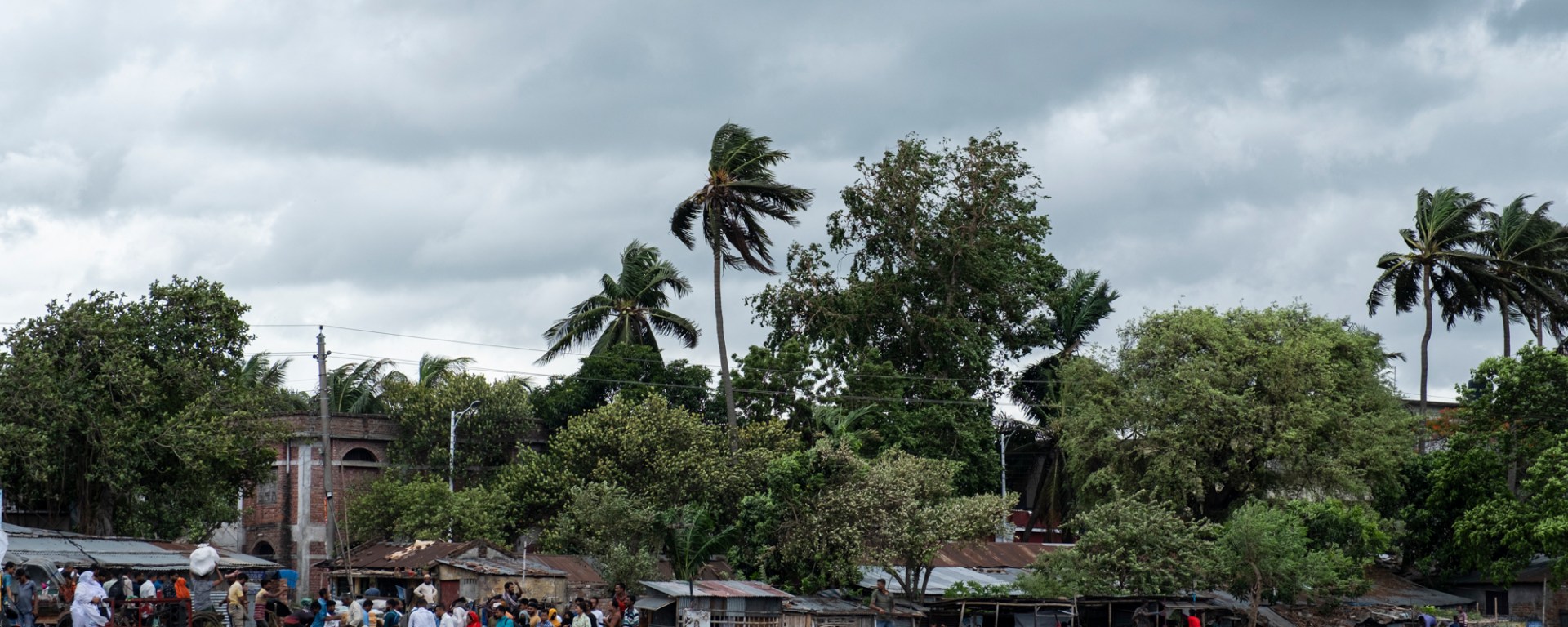
We have talked a lot about the value of “seeing it like it is” and “feeling it like it is,” but, in reality, these are very difficult hallmarks to meet. As a journalist, one of the first things you learn is that everybody wants to put their best face forward.
Traveling in Bangladesh, this challenge was multiplied by our conspicuousness and reliance on others for transportation, translation and information. While we strived to experience what everyday life is like in Bangladesh, the reality is that many of our experiences here were cultivated by the people around us and their interpretations of what we wanted to see.
Still, moments shone through, or, in this case, blew through at speeds upwards of 50 miles an hour.
After a few leisurely days chugging through the Sundarbans and a day anchored at the mouth of the Khotka Khal River, our boat crew decided we needed to return inland to avoid an impending storm. So, we cut our tenure in the Sundarbans short, turned away from the Bay of Bengal, and began the long journey upstream. Our crew stayed up through the night, steering the boat inland as Cyclone Remal approached the Bangladesh coast. Morning light found us anchored a few hours from the city of Khulna, whiling away the low tide.
When we started up again, just before 11 a.m., I ventured upstairs to the roof to feel the full force of the wind. My earrings rattled in my ears. After 30 minutes, my calves began to ache from the exertion of staying in place. Even so far removed from the center of the storm, the strength of the storm was awe-inspiring.
For nearly two weeks, we toured villages and talked with everybody from subsistence farmers to one of the country’s lead meteorologists about climate change, including how climate change is creating more frequent and severe cyclones. But we didn’t anticipate brushing up against one on our trip, never foresaw witnessing the tidal surges and gales firsthand.
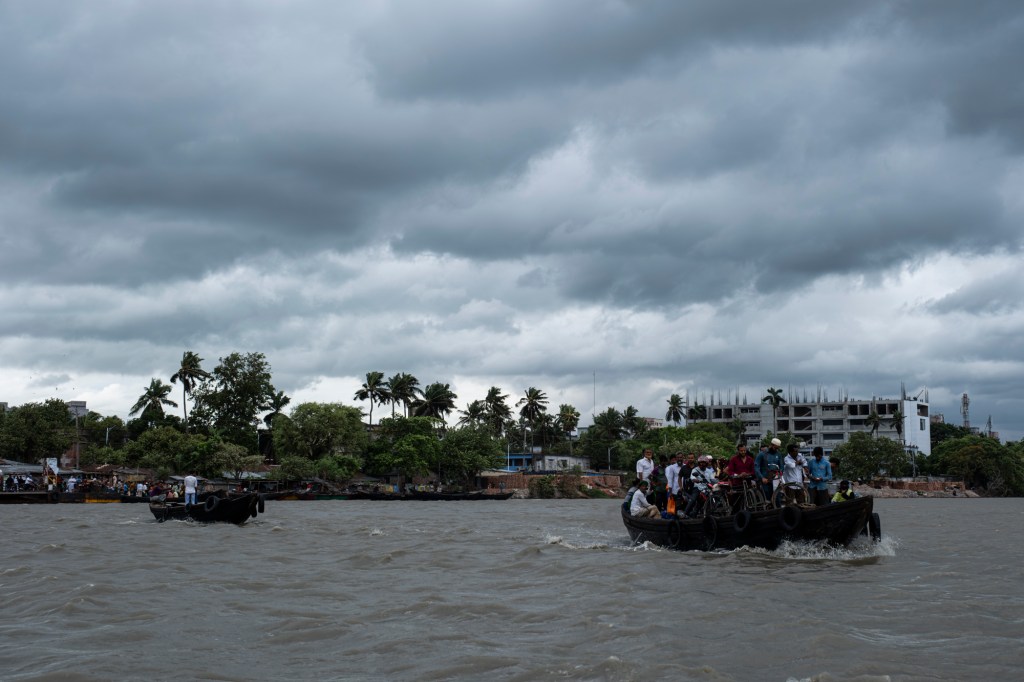
We are now crammed into a single hotel room in Khulna, taking showers and typing up stories as we wait to board our train to Dhaka. The power occasionally flicks off. Outside, it is raining, and the wind continues to gust. A thick odor of sweat and wet feet hangs in the air around us.
Our inconveniences are small compared with those many will experience – lost wages after days without work, homes caved in due to heavy winds, livestock drowned in floods. But facing some reduced version of the inconveniences generated by a cyclone feels integral to truly experiencing Bangladesh. We came to report on climate change, and here is the climate, exerting its power over us.
 UM to Bangladesh
Climate change is real. Its effect are now more clear than ever in recent years. Almost each year, the country is hit by cyclones from the sea on one end, floods from the mountains from the other. If you want to witness more of the results of climate change, I will suggest you to visit the Sylhet region, where flood water is sweeping away half the population from their home. I have seen these disasters first-hand in 2022. You are welcome to check out my blog, where I have also shared my experience of the last years flood.
LikeLike