
The day kicked off with an early wake up around 6:30 a.m. My slumber at the City Inn that night was not the best of the trip, but not the worst. One thing I have come to learn about Bangladesh is that many of the beds are not soft, nothing like my queen-size memory foam mattress back in Missoula, Montana.
The beds here feel like I am sleeping on a sheet of plywood, hard as a rock. But it must be good for my back, right?
After a short breakfast, a few of us who were feeling up to it made our way to the lobby of the hotel where we filed into three tuktuks. The tuktuk might be my favorite form of transportation yet, a small three wheeled taxi with a thin cab situated on the frame of the vehicle. Practical, to say the least.
People from BRAC, a very notable NGO in Bangladesh, greeted us at the entrance of what felt like a small city within the city of Khulna, a slum called Greenland Abashon. We walked and talked to residents of the slum, and BRAC showed us different projects they have built along the way.
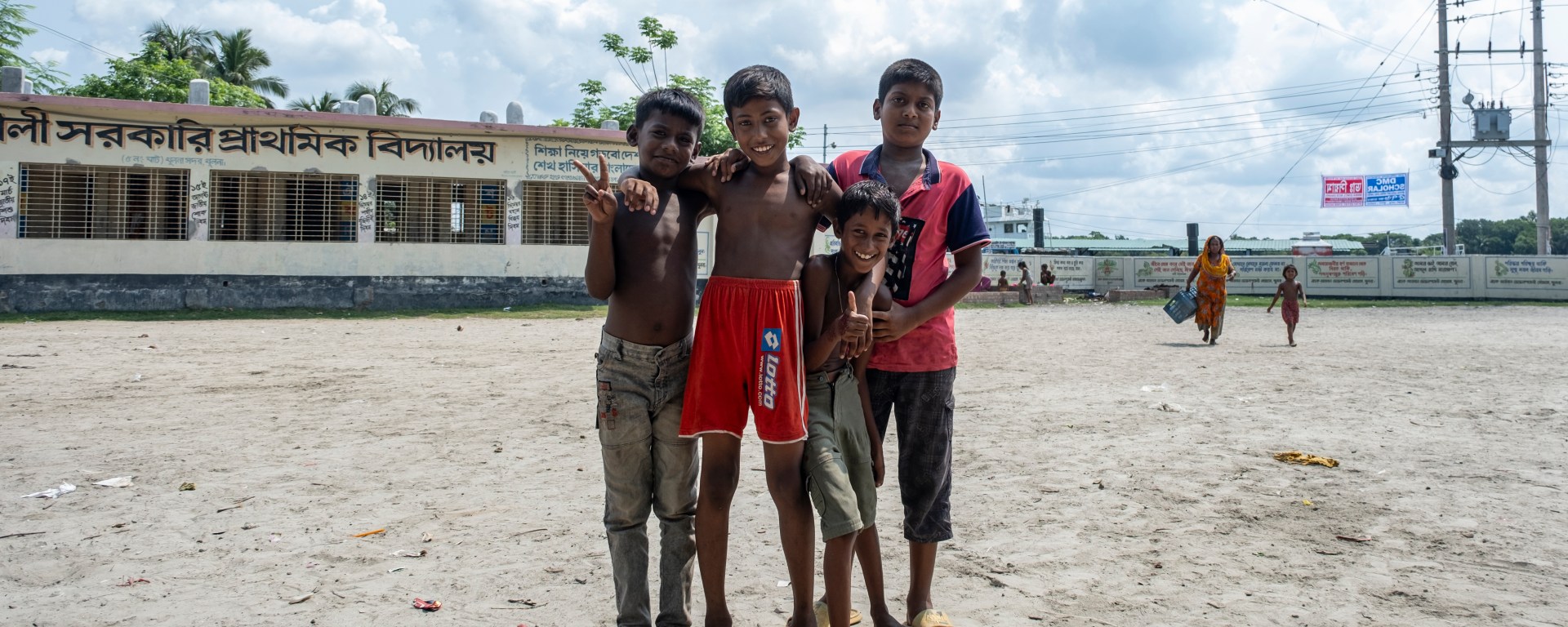
As we wrapped up our tour of the slum, right where a narrow pathway met the main road, I saw a handful of children standing in a dirt area outside of their school. The small area had two small makeshift soccer goals, though here they would call it football. The goals had no nets, and there was a flat soccer ball laying in the dry dirt. I had an interpreter quickly come over to strike up a conversation with the young boys.
We chatted about football, positions and favorite teams. The boys seemed to be beaming with happiness. Laughing, smiling, not a care in the world. The people of BRAC quickly shoved us into tuktuks which would then bring us back to the City Inn and also to our next destination, the boat we were to spend four nights and five days on visiting rural communities and cruising the narrow canals of the Sundarbans, the largest mangrove forest in the world.
The boat was a pleasant surprise, cold air-conditioning and my own sleeping quarters. Some alone time was exactly what I was needing at this point in the trip. I laid my head down in my icebox of a room for what felt like five minutes. “Dear guests, please come down for our first stop of the trip please,” the CEO and our principal guide, Papul, said over a microphone that was attached to speakers in all rooms on the boat.
We took the small, crank-start wooden boat to shore where we were greeted by the kind people of a rural village on the shoreline of the Madhumati River. We didn’t have much time to stop and chat, for our final destination of this jaunt was to a more interior community.
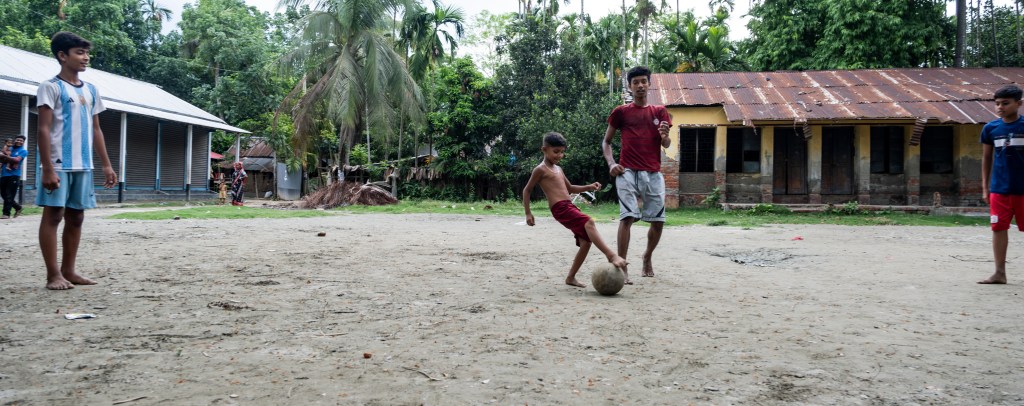
After a 20-minute tuktuk ride we arrived at Galbary and were greeted by coconuts with straws and a platter of fruit I had never seen before. I immediately asked one of the people of the village where the children play football. He led me on a short walk to the front of the schoolhouse where children of all ages were booting around a flat, beat up ball. They immediately asked me to play and I didn’t think twice about it.
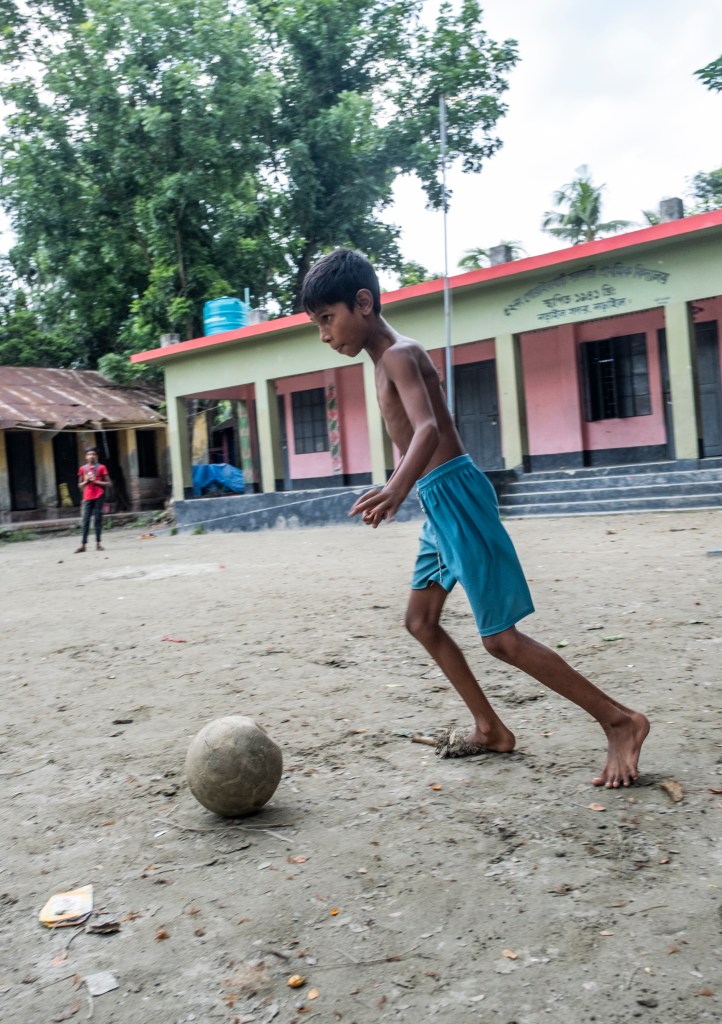
I took my sandals off to join the kids in a circle on the dirt yard, passing the flat football back and forth in the humid evening air. I could have done this for hours. Eventually after a fun round of footy, I talked to them with a translator. I learned their favorite teams, players, positions and why they love the game.
One kid yelled to me in Bengali, but I didn’t know what he was saying. My translator told me while we were walking back to the group that the kid, who wanted to be a striker for Barcelona and who’s favorite player was Lionel Messi, said, “When you come back, can you buy us a new ball?”
I chuckled, but this was the moment I realized that these kids were making the most of their lives, not a care in the world, playing with what they were given and not thinking twice about anything. They deserved, more than anyone, a new football.
 UM to Bangladesh