
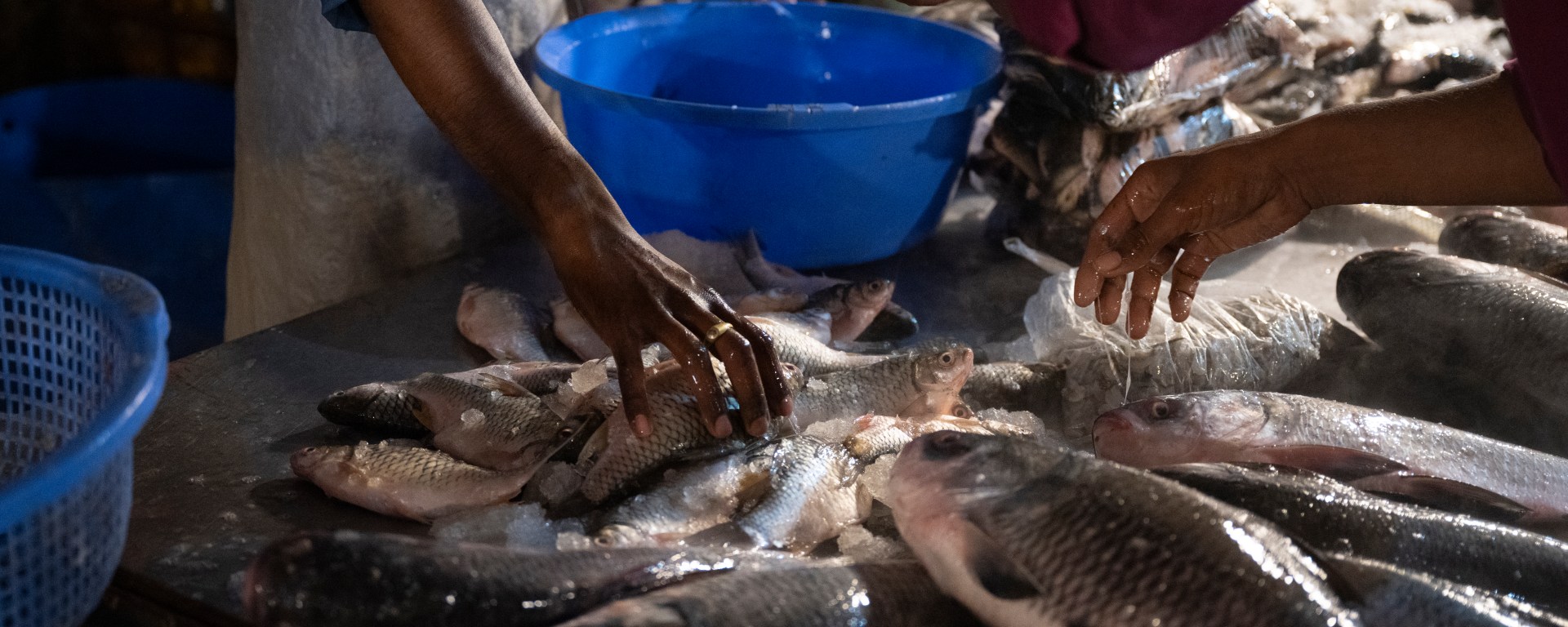
You know you’re close when you can smell it. Fish. The aptly named Karwan Fish Market is the largest of its kind in Bangladesh. Thousands of vendors from across the country travel to the capital city of Dhaka to sell their products in bulk.
Despite its name, the market doesn’t just sell fish; it sells almost every consumable vegetable or meat you can find in South Asia. We arrived at this “everything” market at 4 a.m.


On the outskirts of the market, dozens of men slept on the side of the road, sleeping off the overnight work of unloading crates for hours or preparing the market for the long day ahead. All around us, in the dark of morning, people carrying baskets on their heads, passed by us, stocking or restocking the market. Trucks and bikes stacked with crates raced to the center of the market. Half awake and unable to speak the local language, we entered the largest market we are likely to ever experience.
Thousands upon thousands of chickens caught our eye as we stepped into the bustling market. They have arrived by bicycle, rickshaw, and truck. A young boy standing on top of a truck, skillfully carried six chickens in each hand, holding them by their feet.
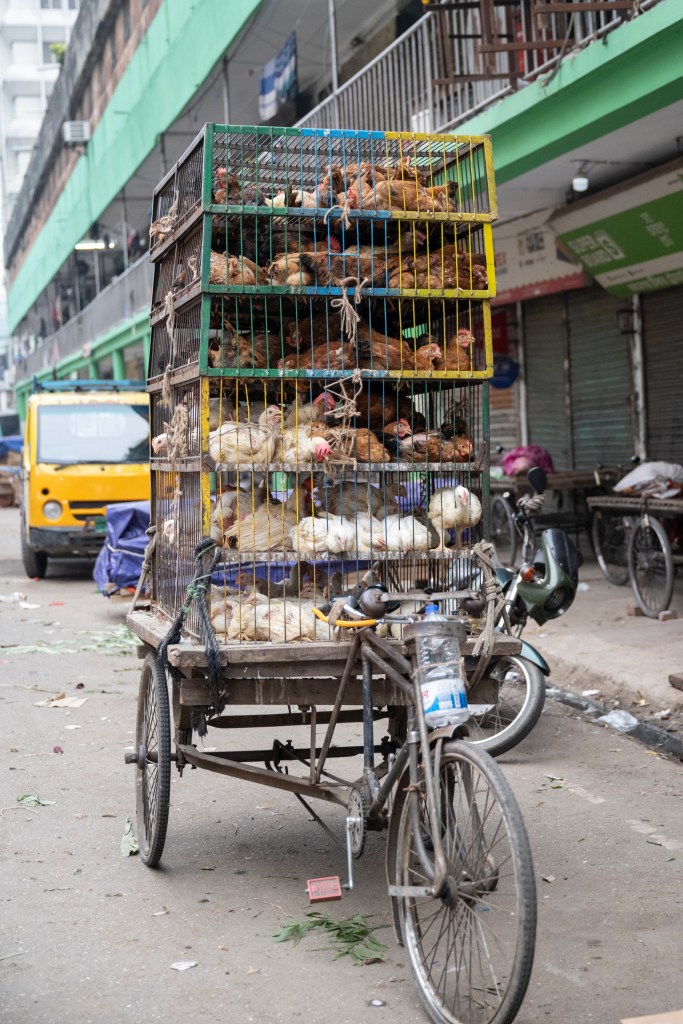
Nurril Hussain, a 26-year-old shopkeeper and Dhaka local sells chickens imported from the northern part of the country. More than 1,500 live chickens filled his cubby of a shop. Business is going strong, he said. Alhamdulillah, he said, if god is willing, all 1,500 chickens will be sold before the market closes.
The chickens, visibly anxious, remained silent, destined for the dinner table. Maybe I would be a vegetarian if this is how I bought my meat. All around us, there are a dozen shops just like Hussain’s. This is not the once-a-week farmer’s market of Missoula, Montana. Here, the freshness of meat is best proven by the life status of the animal: on the hoof or butchered for parts. The market occurs every day of the week, every week of the year.. This is what is required to feed a city of over 20 million people.


The call for morning prayer filled the market and we moved on to the produce section. The musty smell of a henhouse in our nostrils gave way to the essence of fresh produce. We find ourselves bathed in green light that is intended to make vegetables more appetizing.
Like his father before him, a farmer named Julshash sells bales of chillies, cucumbers, and other vegetables from Chattogram, a southern region of Bangladesh. A great benefit of being a farmer is eating what you grow and having land of your own, he said. The hard part is transporting the food to Dhaka to sell, he said.
Extreme heat and heavy rains are making farming more difficult than it used to be, he said.
The chillies before me look verdant and healthy. I would not have imagined how hard it was to get them here. Maybe the green light does conceal something.
Chunks of ice the size of washing machines signal that we were getting close to the part of the market that gives it its name. I accidentally stepped in a large pile of fish scales. As we enter a corrugated metal warehouse we are engulfed in the smell of fish. Fish surround us: River fish two feet long, catfish, tilapia.
The hustle and bustle of the market is overwhelming. We became accustomed to the smell of fish. The density of people was about 1 per square foot. It was impossible to move through the market without squeezing and pushing your way down the aisles.

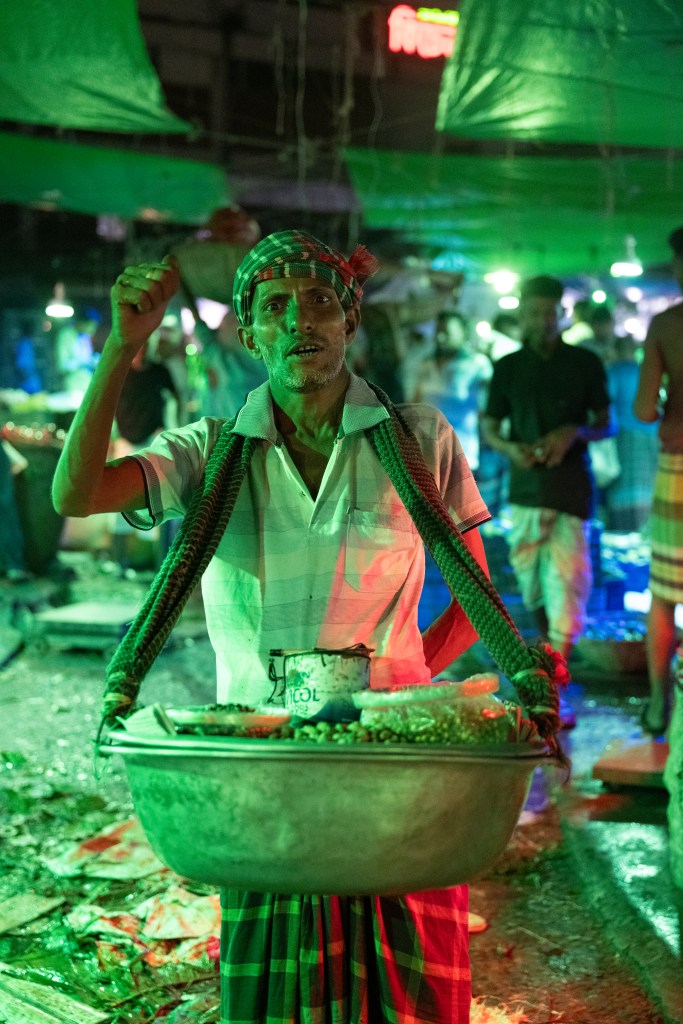
A man with henna in his beard yelled out a bid for 50 kg of silver carp. The purpose of this wholesale market is to buy in bulk.
Elsewhere a familiar fish in unfamiliar form was on sale. The tilapia is sold whole like all the other fish. I eat tilapia at home, buying it in packs of ten frozen filets. These fish were dead; the young salesman told me that today’s market is too slow to justify keeping them alive. Other fish are not so lucky. The resilient catfish squirmed and jumped. The catfish is an enduring sign of life across the tables and barrels. The salesman says they can survive for more than three days with a limited amount of water.
Outside, the sun was up and the city came into focus. Skyscrapers and overpasses tower over the crowds, silent observers of an angry anthill of activity. The market never sleeps. People are always loading and unloading.
This market is the heart of the city, shouldering the challenge of feeding one of the world’s most densely populated cities. Wherever you are, whenever you are, someone is buying fish in the Karwan Everything Market.

 UM to Bangladesh